
Visiting Marrakech - Photoblog
A few years ago I had the opportunity to visit the ancient city of Marrakech in Morocco—a destination that had long been on my bucket list. The city’s mystique, rich culture, and unique photographic opportunities were a powerful draw. Marrakech has served as a cultural and trading center for centuries and remains one of the busiest cities in Africa today. At its heart lies the old fortified city, or medina—a UNESCO World Heritage Site—filled with bustling souks and countless vendors. This historic quarter was the main focus of my visit, while areas outside the medina felt more like other modern urban centers.
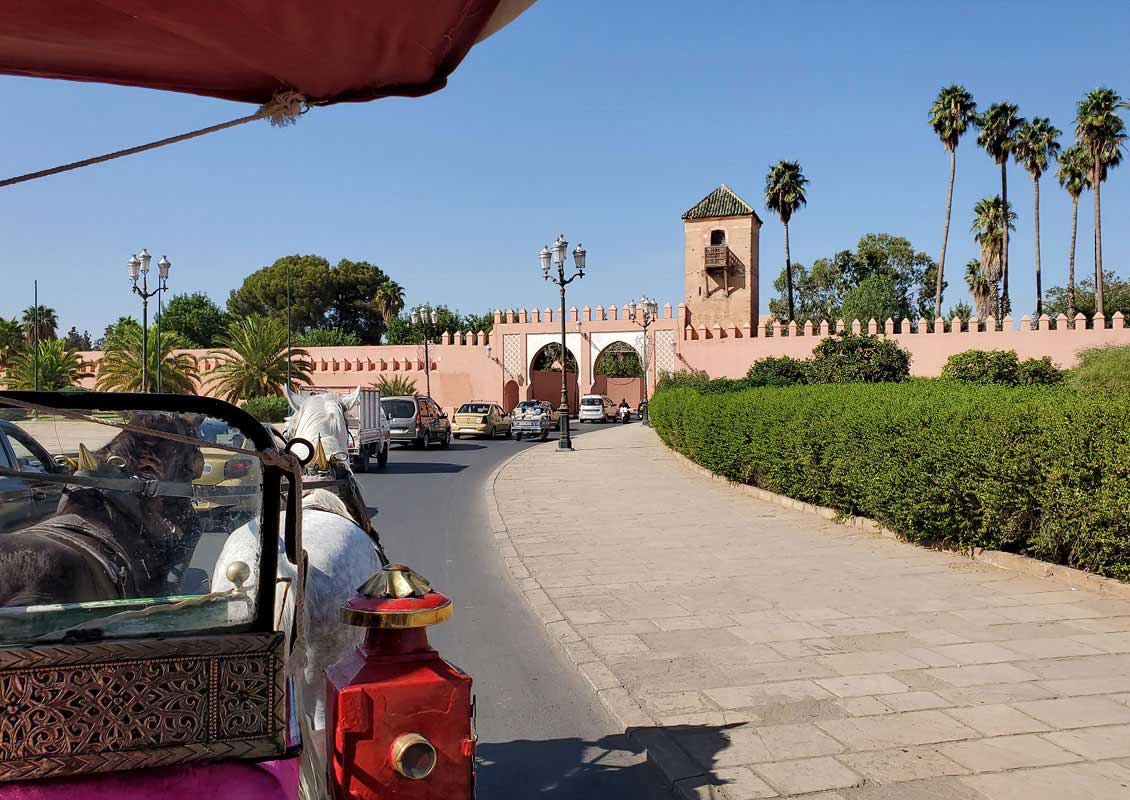
One of the most relaxing ways to explore the city is by horse-drawn carriage. After a bit of customary haggling, we climbed aboard and set off. Here we approach the walls enclosing the medina.
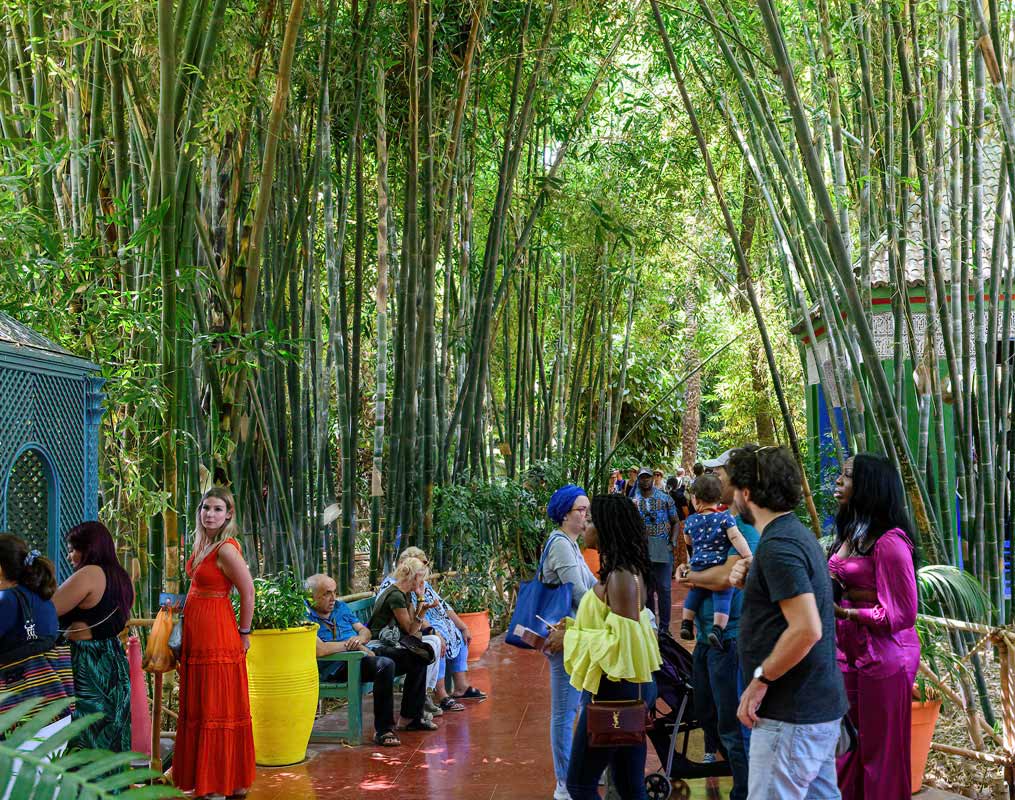
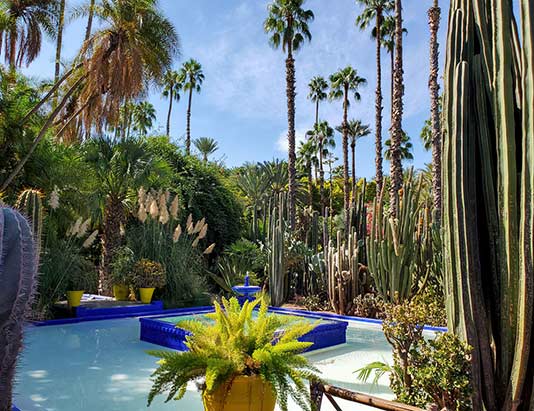
One of Marrakech’s most
celebrated attractions is the Majorelle Garden,
also known as Yves Saint Laurent’s Garden. This magnificent
oasis in the heart of the city features lush tropical plants
and vibrant colors, creating a serene and visually
captivating setting for a leisurely stroll.
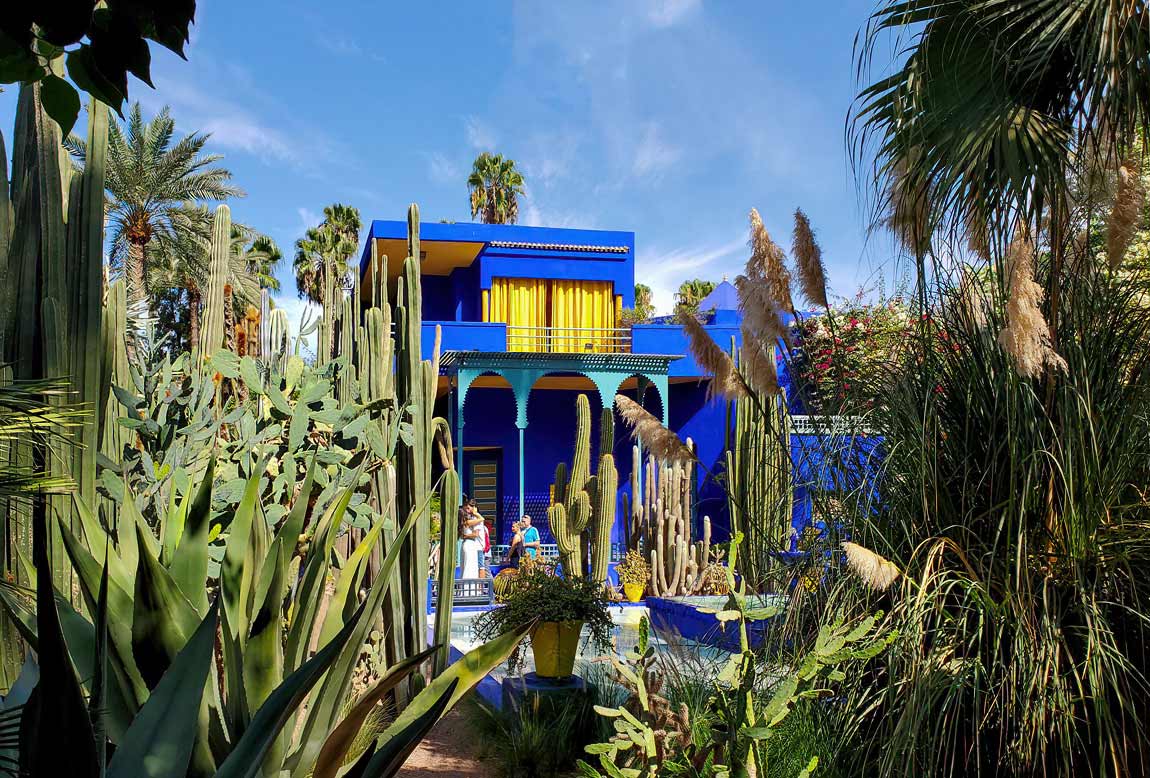
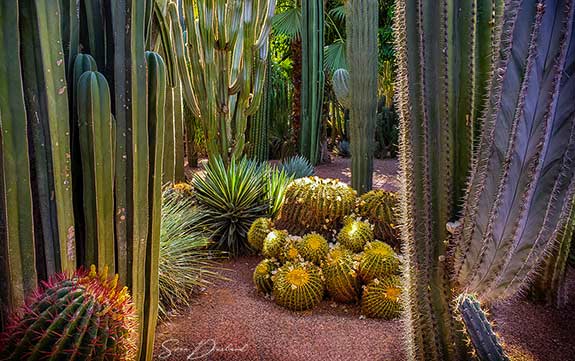
Art Deco style buildings painted in a signature intense blue
color are found throughout the garden.
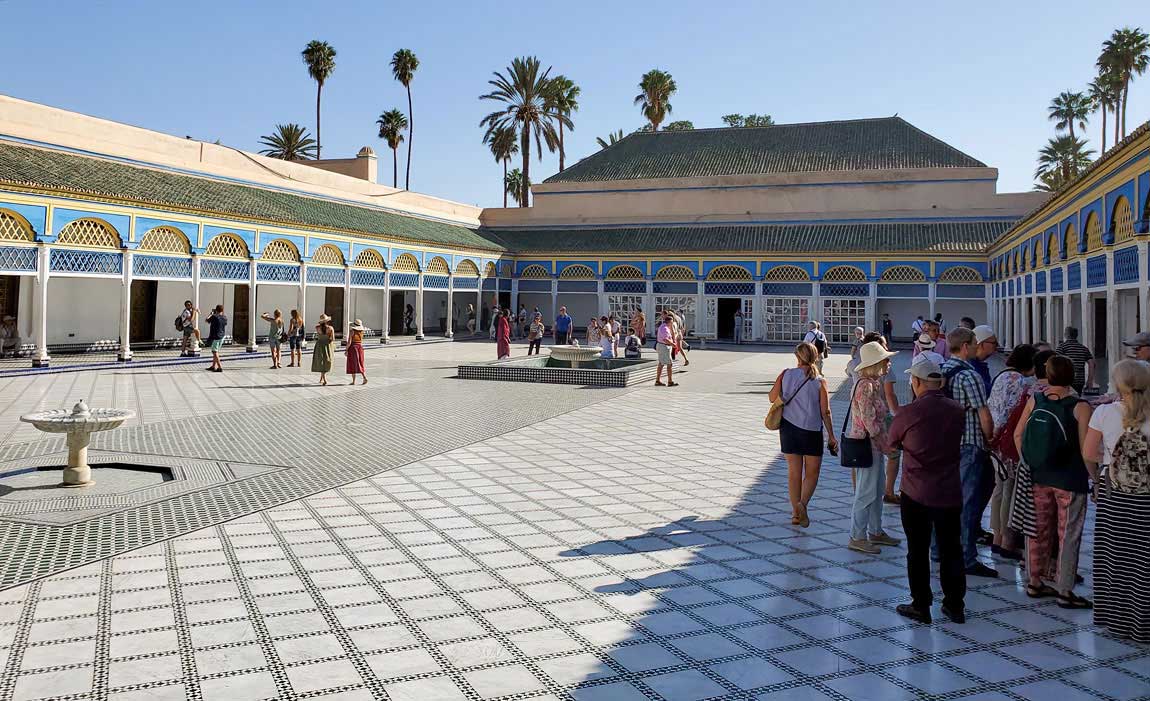
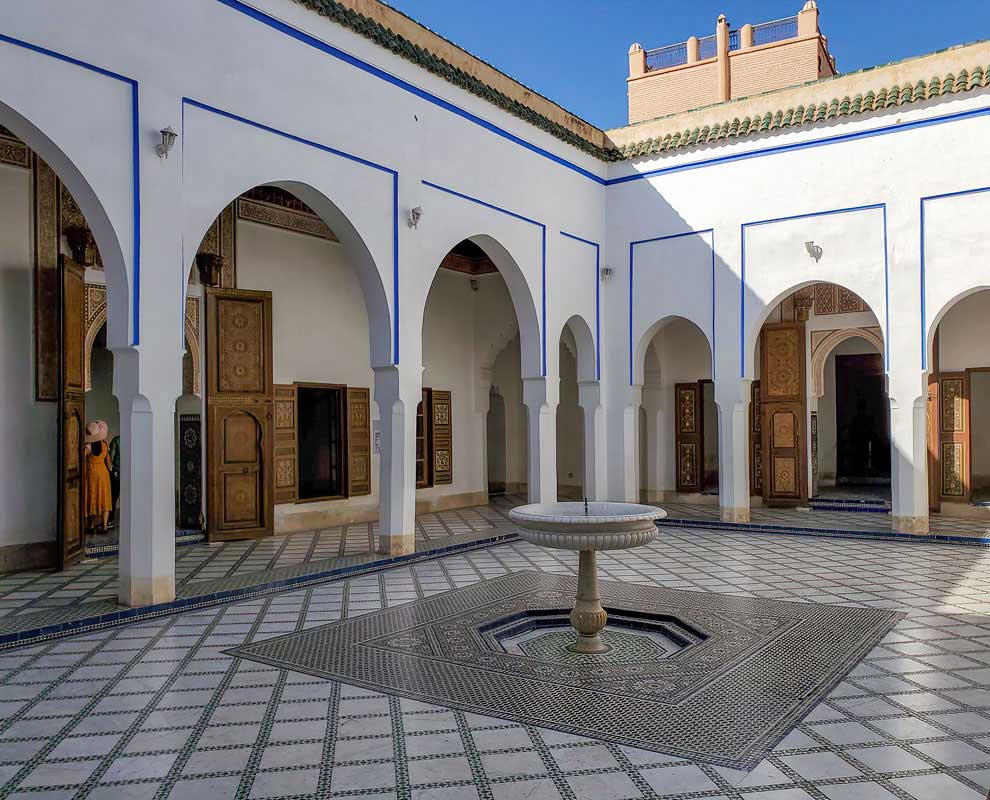
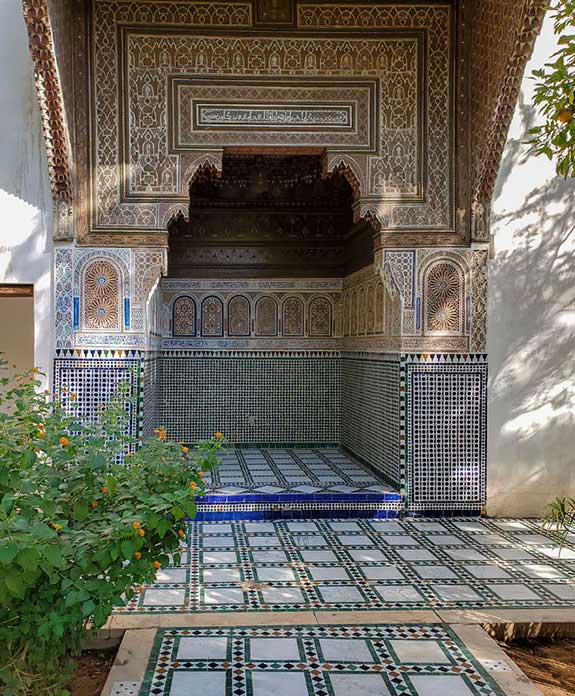
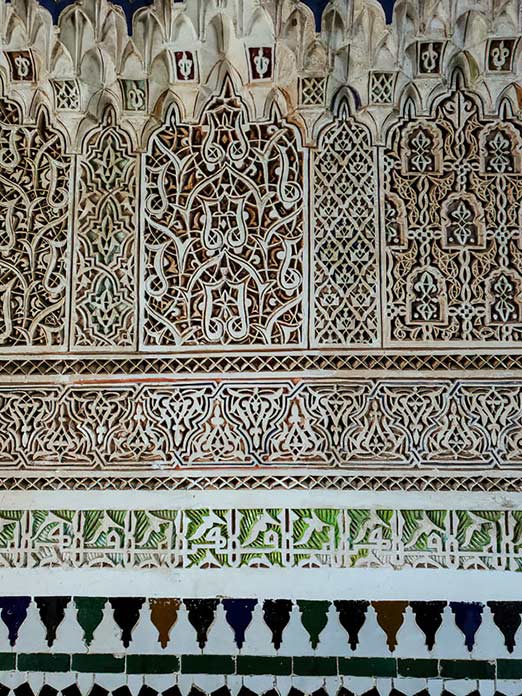
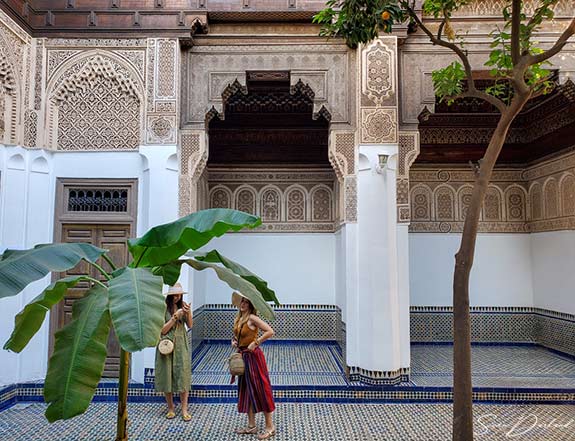
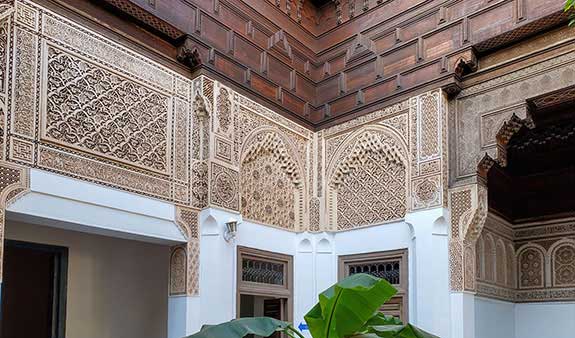
Another must-visit attraction is the Bahia Palace, built in
the late 19th century. It was intended to be the greatest
palace of its time. The palace has a plethora of intricate
wood and stone carvings as well as extensive mosaic
decorations.
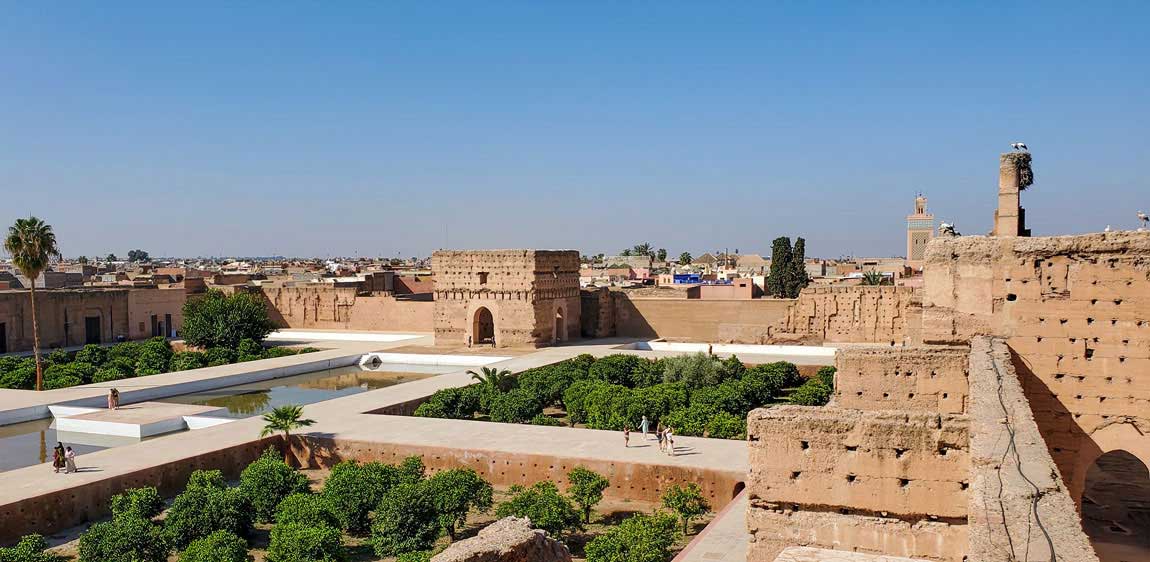
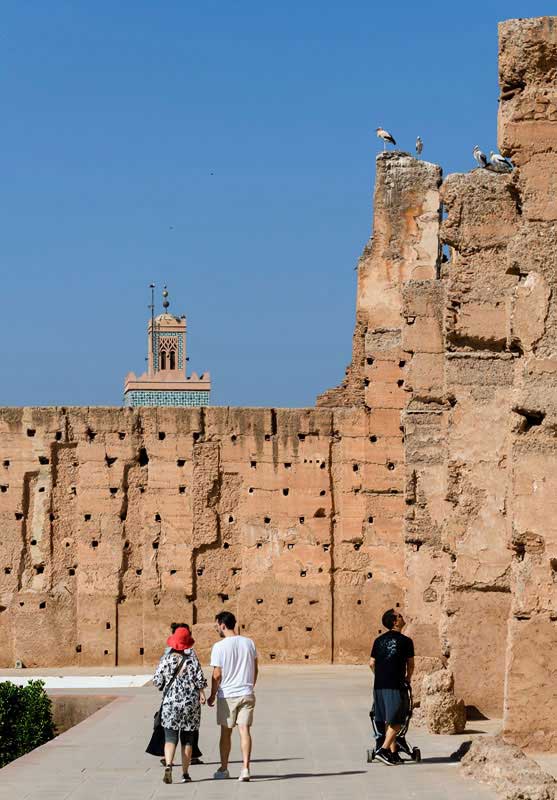
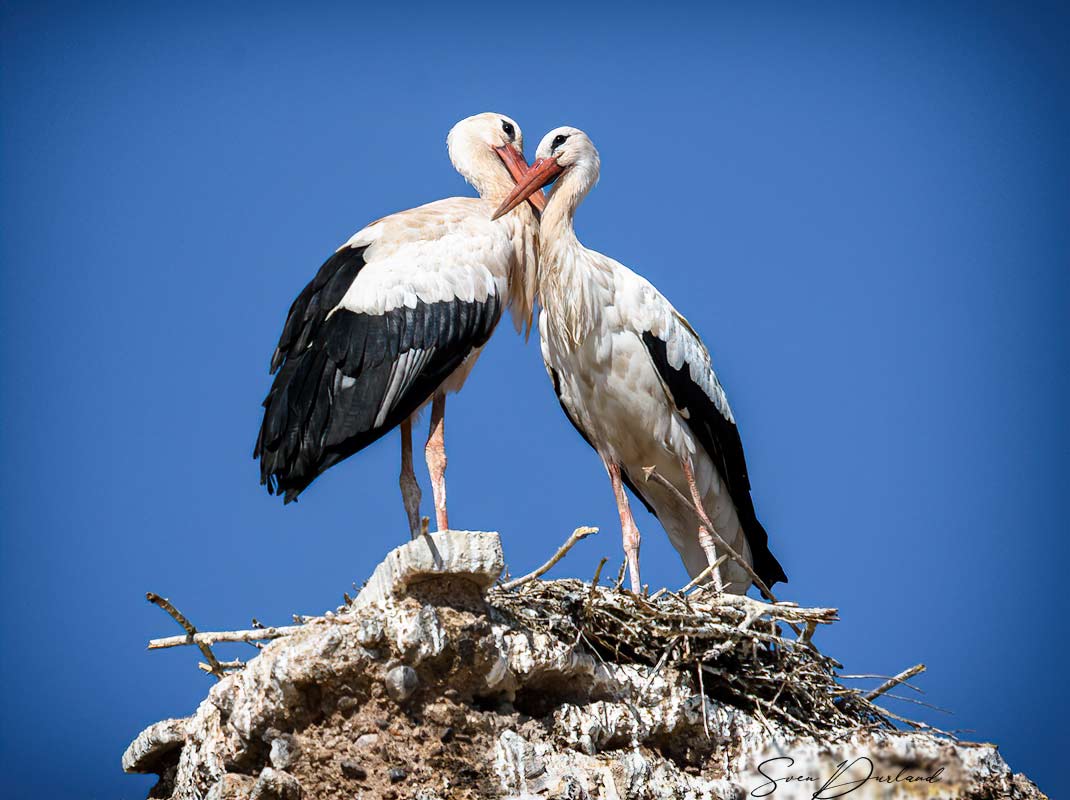
El Badi Palace, a
16th-century ruin, is well worth a visit. The grounds
feature sunken orange groves and reflecting pools, creating
a unique and atmospheric setting. The site is also home to
numerous large storks, which can often be seen nesting
and gathering throughout the ruins.
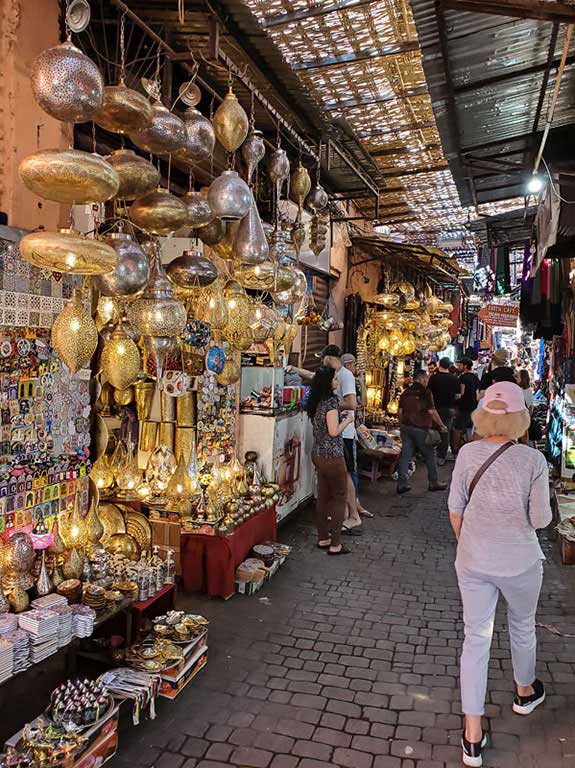
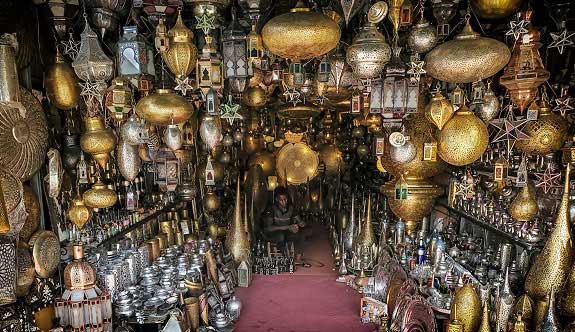
Narrow alleys within the souks are densely lined with vendors and their stalls, forming a maze that can easily feel both overwhelming and disorienting. It’s helpful to download an offline map on your phone and use GPS to keep track of your location. These tight passageways are shared by pedestrians, mopeds, donkeys, and carts, requiring constant awareness as you move through them. Along the way, you’ll encounter an abundance of alluring lantern shops, as well as stores offering clothing, leather goods, and jewelry.
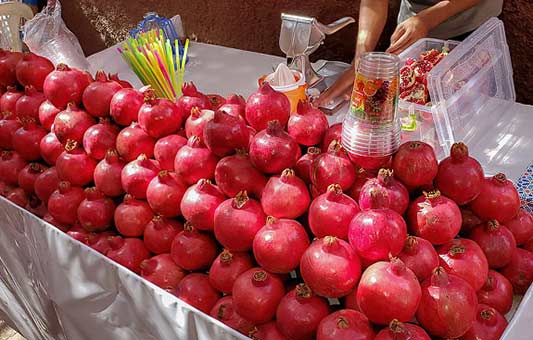
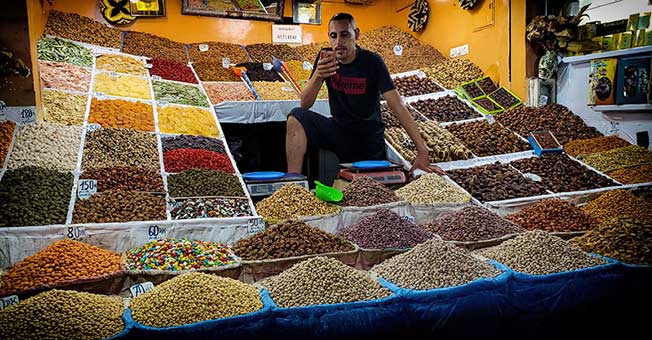
After wandering through the seemingly endless alleys, a cup of freshly pressed pomegranate juice can be wonderfully refreshing—or perhaps a handful of nuts to recharge along the way.
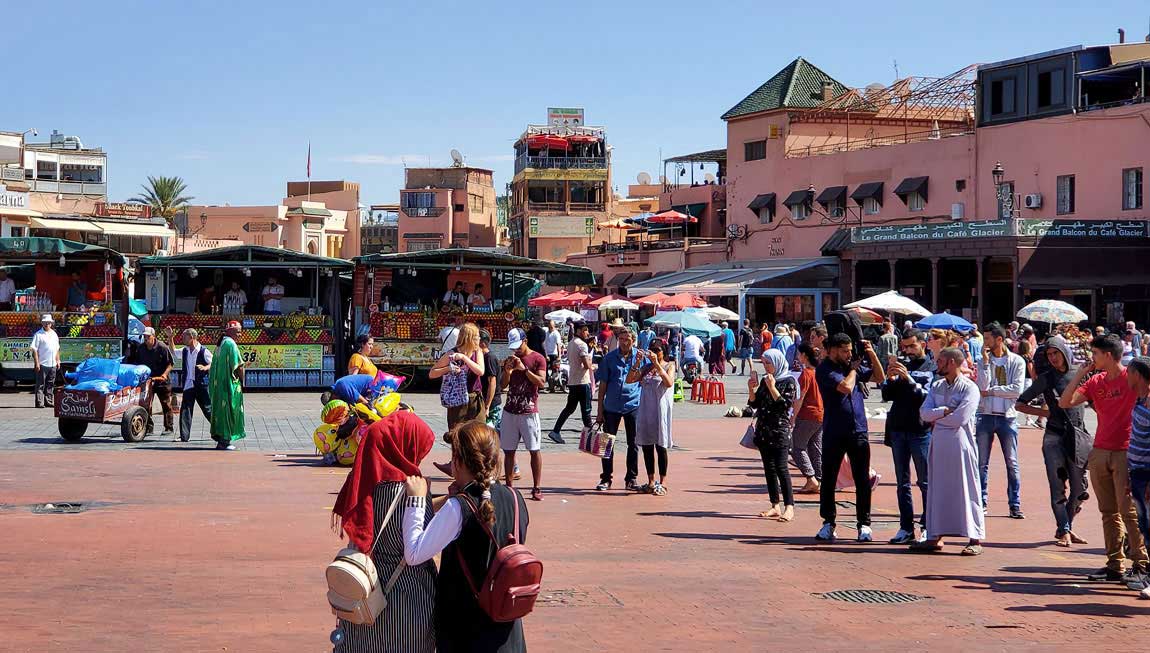
Jemaa el-Fnaa, at the heart of the medina, is one of the busiest public squares in Africa. Here, snake charmers, monkey handlers, magicians, and one-man bands perform alongside a wide array of food stalls.
The energy is vibrant and captivating—though at times, it can also feel hectic and overwhelming.
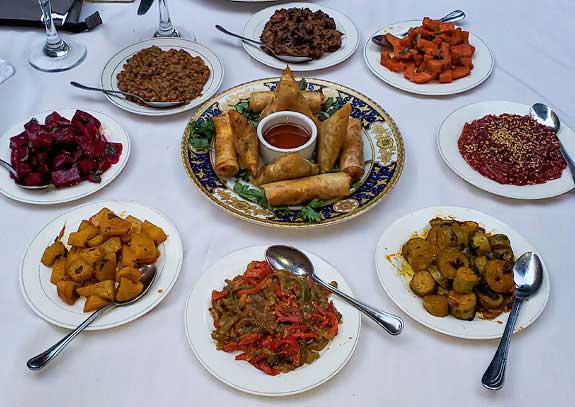
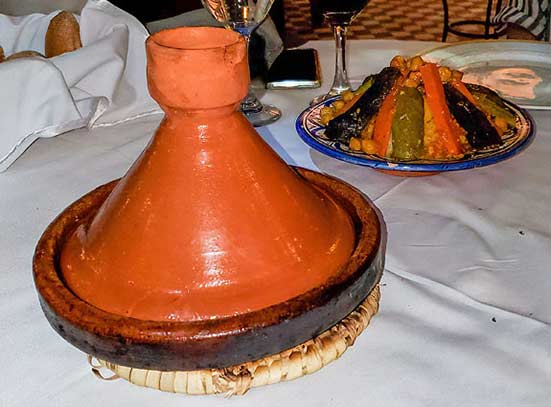
Restaurant dinners often begin with a selection of appetizers, typically shared. The image on the left shows a sampling for two.
The main course, shown on
the right, is usually prepared in a traditional tagine
cooking pot. The meals we enjoyed were consistently
delicious, infused with the distinctive and aromatic flavors
of Moroccan cuisine.
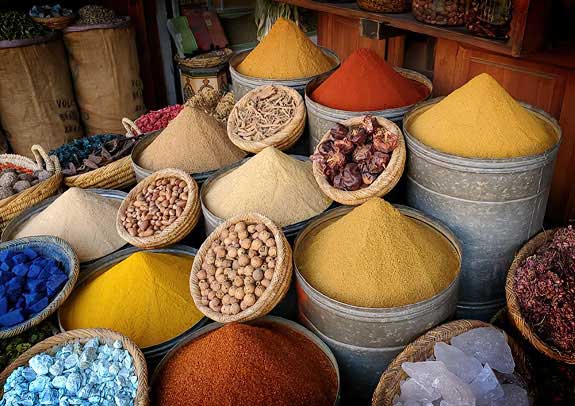
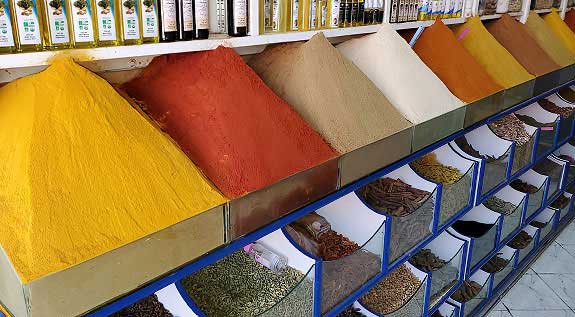
Visiting the spice market was one of my key photography goals. Finding it, however, proved to be an adventure. With limited Arabic and French, we relied mostly on hand gestures and asked for directions several times.
After many twists and
turns through the maze of alleys, we finally arrived at the
vibrant and aromatic spice market—well worth the effort.
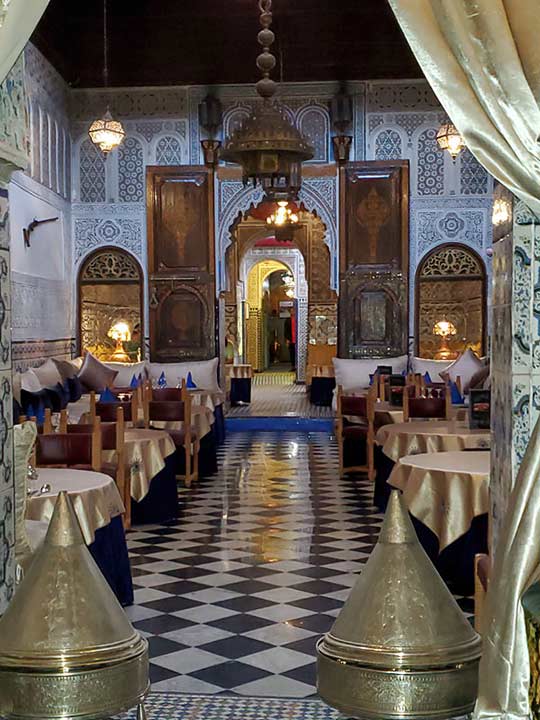
By chance, we wandered through an ornate doorway in a narrow alley and found this place for lunch. A staircase led us down at least two stories underground, revealing a hidden and atmospheric setting.
The restaurant, Dar
Essalam, is well known and has hosted notable guests,
including Winston Churchill during his visit after the
Second World War, as well as Alfred Hitchcock while filming
in the 1950s. Its subterranean location likely serves to
escape the intense summer heat.
Conclusion
Marrakech is an incredible destination—rich in culture, atmosphere, and sensory experiences. For Western visitors, the city offers a fascinating glimpse into a different way of life, from its cuisine to its daily rhythms.
For photographers, the opportunities are endless. Staying within the medina provides easy access to many of the city’s most compelling sights, all within walking distance. The area also offers a range of excellent hotels and restaurants.
During our visit, we found the people to be friendly, the alleys reasonably clean, and the overall environment welcoming and safe. Since taxis do not operate within the medina, it’s important to be prepared for plenty of walking through its narrow, winding street
______________
EMAIL: info@durlandphotoart.com
Archival Fine Art Prints are available of most images in sizes up to 20 x 30 inches.
Copyright Sven Durland Photography